Ever Seen a Patient with an Implant? Read This!

Dental Revelations Blog-4621

Today I saw a patient who had had an implant done to replace upper right first molar. The implant treatment was finished a year ago in another practice.

Since then the patient had seen hygienist twice in my practice. The implant crown itself looked immaculate but the gum was very red and puffy and it bled heavily after probing.

I knew what to ask next and I even knew the patient’s reply to this.

“Were you told how to clean the implant at home?”

“No I wasn’t” replied the patient with is-it-supposed-to-be-cleaned-expression on his face.

This happens too often. Almost every time I see a patient who has recently had an implant done.

Note for all the dental professionals who make the implant treatment’s final stages and do not give oral hygiene instructions (OHI) for the patient:

You should always tell and show how the patient can clean these costly pieces of metal and porcelain. It is your responsibility as a dental professional and the paying patient’s right!

Can you give me any other excuse for not giving OHI than the fact that you are too busy making money and forgetting the basics? I believe you cannot.

And you hygienists who see patients with implants:

  1. Always check how the patient is cleaning them. More so if the gum around the implant is either bleeding or there is plaque around it
  2. Advice if necessary and show in their mouth how it is done
  3. Check if the patient understood your instructions by asking them to show they can do it. Teach them if they struggle
  4. Check on a follow-up visit that the gum has healed. If not, refer to a dentist

Why Is It So Important?

With the implants it is vital that there is no bleeding in the surrounding gum. They will get an implant’s equivalent to gingivitis – peri-implant mucositis which can lead to the peri-implantitis (same as periodontitis with teeth) very rapidly. The worst case scenario is that the implant will lose its integration to the bone which could have been easily prevented.

The patient I saw today left home with instructions on how to look after his implant. And I will see him for a follow-up visit to make sure the gum has healed (can you see the shining halo around my head?).

Honestly, it’s not that hard to do your job properly so shape up please!


Here‘s further reading on the subject.

Superiority of the Philips Sonicare Toothbrush

Dental Revelations Blog-4586
Philips Sonicare forever!

I used to be brainwashed by one of the biggest electric toothbrush manufacturers and thought that there is no better toothbrush than these round-headed ones. I was so stuck in this illusion that I didn’t even give another toothbrush a chance to be better.

But then I moved to another country where two of the biggest toothbrush brands were almost equally popular compared to my country of origin where this manufacturer with round-headed toothbrush was and is dominating the markets.

In my new country of residence I was offered a free trial of the Philips Sonicare. I was amused by the looks of it (it was the old model) and thought it wouldn’t be a very good toothbrush. I almost declined the free trial because I was so convinced about the superiority of this round-headed toothbrush.

But then I gave it a go. It was ticklish as hell at first but thankfully my colleague dentist had warned me about it. I carried on using it for the full two minutes. Once I was done I got my moment of awakening.  My teeth had never felt better. So smooth, so clean.

Patient Case

I was treating a lady – lets call her Sue – at her early twenties for severe gum disease. She had already had periodontist treatment and understood the severity of the situation considering her young age. Sue was very motivated to look after her teeth and did everything she was advised to do.

Sue had a surface retained glass fibre reinforced periodontal splints (everStick®PERIO) on her lower and upper teeth. She was using Tepe interdental brushes of various sizes twice a day and an electric toothbrush – the round head one. She changed the brush heads every month (even though she was informed it was necessary every 3 months). Her brushing technique was checked many times and it was perfect.

But every time I saw Sue for the 4-monthly scale and polish she had supragingival (visible) calculus on her lower front teeth. Lots of it. And she started to be very distressed about it because she was doing all the right things to prevent it. I tried to ease her worry and told that the supragingival calculus was not a problem gum wise as long as it was removed regularly. And in her case the gum didn’t even get inflamed by the presence of supragingival calculus. But it did not calm her mind. She didn’t like the looks of it as it was clearly visible when she smiled.

I had no idea what to advice more than I already had. She had all the right tools – interdental brushes and a latest model of an electric toothbrush. She used them often enough and with a correct technique.

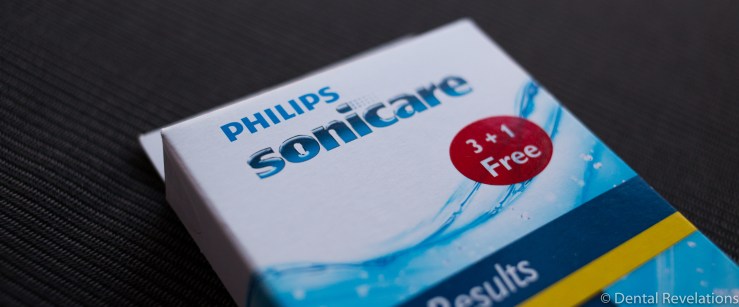
Then I thought about Philips Sonicare I was using. I suggested to Sue that she could change her toothbrush. I expressed my frustration over the fact that she had spent quite a lot of money for the current toothbrush but this was all I could think of that might help her. I showed her the correct technique of the Sonicare just in case she followed my advice.20181104_152933.jpg

Next time Sue came in she had a wide smile on her face when she entered my surgery. She said the calculus had not built up at all! Sue had gone straight to the shop after the last visit and bought the Philips Sonicare toothbrush. She was very happy and thankful for the advice I had given.

This was even more of an eye opener for me than my own first experience with Philips Sonicare.

Why Is It Better?

The name says it all. It’s because of the sonic vibration. When used correctly the sonic vibration can reach beyond the bristles as the sonic vibration travels through the liquids in mouth.

People who think Sonicare is not a good toothbrush have not used it with a correct technique.

I have noticed in the past 15 years of using the Sonicare that I and my patients who us it, get less stains. Hardly any even though I drink coffee and tea.

Conclusion

In my country where I live and work now, the Philips Sonicare toothbrush is not very widely used or recommended by the dental professionals. I am considered as odd one out when I tell I use one. And even stranger it seems that I recommend it to some of my patients. Almost as if I didn’t know my business.

In the dental show case I didn’t even find a representative of Philips Sonicare from any stands. And I cannot find any contact details for a rep to invite her to my practice or to express my views over their marketing strategy. You see the marketing is very poor compared to their competitor who has given trial models to my practise with disposable brush heads so that the patient can be shown the correct technique etc. They give out free electric toothbrushes to the professionals (I have written about it on my previous post) and visit practices regularly to promote their products.

But thankfully the Philips Sonicare toothbrush is available in the shops. And I am doing a small-scale marketing for them. My hope is that they would take more aggressive approach to the almost non-existing marketing. I could even go to the next show case as their representative just to annoy the rep of their competitor who told me that the Philips Sonicare is as effective as manual toothbrush (you can read about it here).

It would definitely make my work easier when convincing the patients about the superiority of the Philips Sonicare toothbrush. And perhaps my colleagues will start to recommend it too.

Here are couple of models of Philips Sonicare electric toothbrush:

Basic model with 31000 brushstrokes per minute (don’t buy anything lower than 31000)

The flagship model with 31000 brushstrokes per minute


New Natural Remedy (Fluoride-Free) for Decay

Dental Revelations

Just kidding. Just wanted to have your attention.

Today I am going to write about fluoride. And the reason for doing this is that I keep on running into articles and websites promoting fluoride-free toothpastes (and water). Not only they recommend non-fluoride toothpastes but also they tell that the fluoride is toxic or poison when entering body.

It is rather entertaining to read these articles but sooner or later the amusement turns into annoyance. Especially after comments like this

I love the look on dental hygienist’s faces when I refuse the fluoride treatments or toothpaste for me and my kids

When the adults practice their anti-fluoride beliefs on their kids it is simply heart breaking. I have seen kids whose milk teeth were so badly decayed that most of them had to be removed. I have seen kids in pain because of the decay.

Why would you want to put your kid through such experiences? They wouldn’t thank you if they knew what caused their bad teeth as an adult. But they will never find out the truth because they have been told that it runs in the family to have weak teeth… yeah right. There is no such thing as weak teeth that are hereditary. It’s all about oral hygiene habits and lifestyle habits.

What could be called hereditary is the bacteria in mouth that you might get from your parents as a baby. If the parents neglect their teeth (poor oral hygiene and lifestyle habits) there is great amount of cavity causing bacteria in the mouth and if that bacteria is transferred to the baby there are big chances the child will struggle with decaying. And this means this child needs fluoride. And if the parents do not offer it… pain, screaming in fear at the dentist, sedation/general anaesthesia, fillings, extractions, malposition of the permanent teeth because of the loss of the milk teeth… So unnecessary!

To be honest, I can understand the worry over the fluoridated water to some extent. After all it goes into your body.

But the fluoride toothpaste! You are not meant to swallow it, are you? With young kids you can’t prevent them swallowing the toothpaste but that’s why you use only very tiny amount of it.

But you adults, come on! The local effect of the fluoride is important in prevention of decay. You brush for 2 minutes (hopefully) and that’s the time the fluoride stays in your mouth. Then you spit it out and rinse with water (I don’t but that’s why I glow in the dark…ha-ha). No fluoride has entered your body.

20181104_152933.jpg

But still some people mix all sorts of things with “healing properties” to be used as a toothpaste. Herbs, clay, coconut oil etc. I just read an article about coconut oil that was recommended by Dr. Somebody to be used instead of fluoride toothpaste. And as if the article wasn’t full of baloney but the comments at the end of the article were even more so.

…I laugh when dentists tell their patients not to brush for an hour….. why leave the acidity on your teeth to do damage for an hour – five times a day – seven days a week etc…. it adds up!

This person refers to a previous comment where somebody said he vigorously rinses his mouth with water after eating anything (which is fine). I’m sure all the professionals know what will happen to the teeth if one brushes every day after every meal – five times a day – seven days a week etc.

Erosion or to be precise it is abrasion that will happen to the teeth and that is irreversible damage which will lead to hypersensitivity of the teeth and make the teeth more prone to decaying.

Facts Simplified

There are minerals in the enamel of the tooth (hydroxyapatite). Minerals like calcium are lost everyday from the enamel because of the acids the bacteria produce from the carbohydrates in the diet.

The saliva tries to minimise the loss of minerals by neutralising the acids (remineralisation) but saliva can’t do magic if the host’s lifestyle is giving it too much to handle. Snacking (eating more frequently than 5-6 times a day), drinking acidic or sugary drinks in daily basis between the meals, eating sweets the wrong way (yes, there is a right way of eating them), adding sugar to the tea/coffee (even milk contains sugar) and consuming them between the meals. All these habits produce too much acid for the saliva to handle and it is not able to return all the lost minerals back to the enamel.

Loosing too much minerals from the enamel means decaying.

So to prevent that you need to find a way to compensate the lost minerals. The most important one is the calcium. And when combined with fluoride it repairs the enamel with very strong fluorapatite that is hard for the acids to break. It is much stronger material than hydroxyapatite that the enamel is originally made of. Some professionals even say that area of the enamel that has been replaced by fluorapatite won’t ever get decay.

But even if you do use fluoride in some form you will get decay if you have poor oral hygiene and your eating habits are harmful to the teeth. The fluoride will only slow down the decaying process.

There are exceptions of course. There are individuals who neglect their teeth and never get a decay. They might not use fluoride toothpaste or they might not brush at all. I will emphasise that they are exceptions. Average Joe will get decay I’m afraid. I have already written about this on my previous post. I wrote that it is very rare for people to have good enough oral hygiene habits. It is about one in thousand patients who do not need my interference in looking after their teeth. So most of us need minerals (calcium and fluoride) to protect the teeth from our laziness and unhealthy lifestyle.

Fluoride we cannot get through our diet unless you eat fish with the bones but even then there is no localised effect on teeth. So we need it from somewhere else. And the fluoridated water is simply not enough as it passes through the mouth and does not provide long enough localised effect (so don’t use that as an excuse). That’s why we use the toothpaste.

Right Way of Eating Sweets (Thought You Might Want to Know)

You can eat sweets without getting decay. Us dental professionals are a living proof of that. You see we looooove to eat sweets but rarely get decay. I will tell you how we do it.

  1. If you buy pack of sweets eat them in one go and have xylitol chewing gum, slice of cheese or fluoride tablet once you are finished. If you eat one sweet every 10 minutes for the next two hours you will have an acid attack in you mouth for approx. 2 hours and 30 minutes. Or even worse example. If you take one sweet every 30 minutes for the full working day it means you have had an acid attack the whole time you were working. Acid attack means losing minerals. And I have already told you earlier what happens if you loose too much minerals which you certainly will do if you have 7-8 hour-long constant acid attack.
  2. Eat sweets as dessert. You get acid attack already because of eating and you can avoid getting an extra acid attack by eating the sweet in one go after a meal. Have xylitol chewing gum or pastille, slice of cheese or fluoride tablet once you are finished.dental-revelations-blog2
  3. Whenever possible and if you stomach can take it, buy sweets that are sweetened by xylitol. Now people often blame the xylitol for the laxative effect of sugar-free sweets. But it is often not the xylitol that causes the upset stomach. It is the maltitol syrup. So seek products that are sweetened 100% by xylitol.


Please note: This post is directed to healthy adults. People whose saliva flow is impaired through illness or medication need more intensive fluoride treatment on their teeth.