You think the floss is effective? In most cases it is not.
I couldn’t hide my satisfaction when I read the news in the US about effectiveness of the floss. Finally something I have been preaching about is out and in the open for everyone to read.
You see I have met many dental professionals who have doubted my way of giving oral hygiene instructions especially regarding the floss. I have met so many of them that I have stopped explaining the reasons behind my recommendations.
My hope has been that some day they would get enough experience to notice that the floss isn’t doing a proper job. Or that they would start using the disclosing solution (I use Rondell Disclosing Pellets) which would definitely prove it.
We’ll see what happens. My fear is that many will stubbornly stick to their old ways. Change will always bring along resistance.
If you haven’t read my blog before, please take a look at this page about my recommendations.
And click this link if you haven’t read the news about the effectiveness of floss yet.
Today I saw a patient who had had an implant done to replace upper right first molar. The implant treatment was finished a year ago in another practice.
Since then the patient had seen hygienist twice in my practice. The implant crown itself looked immaculate but the gum was very red and puffy and it bled heavily after probing.
I knew what to ask next and I even knew the patient’s reply to this.
“Were you told how to clean the implant at home?”
“No I wasn’t” replied the patient with is-it-supposed-to-be-cleaned-expression on his face.
This happens too often. Almost every time I see a patient who has recently had an implant done.
Note for all the dental professionals who make the implant treatment’s final stages and do not give oral hygiene instructions (OHI) for the patient:
You should always tell and show how the patient can clean these costly pieces of metal and porcelain. It is your responsibility as a dental professional and the paying patient’s right!
Can you give me any other excuse for not giving OHI than the fact that you are too busy making money and forgetting the basics? I believe you cannot.
And you hygienists who see patients with implants:
Always check how the patient is cleaning them. More so if the gum around the implant is either bleeding or there is plaque around it
Advice if necessary and show in their mouth how it is done
Check if the patient understood your instructions by asking them to show they can do it. Teach them if they struggle
Check on a follow-up visit that the gum has healed. If not, refer to a dentist
Why Is It So Important?
With the implants it is vital that there is no bleeding in the surrounding gum. They will get an implant’s equivalent to gingivitis – peri-implant mucositis which can lead to the peri-implantitis (same as periodontitis with teeth) very rapidly. The worst case scenario is that the implant will lose its integration to the bone which could have been easily prevented.
The patient I saw today left home with instructions on how to look after his implant. And I will see him for a follow-up visit to make sure the gum has healed (can you see the shining halo around my head?).
Honestly, it’s not that hard to do your job properly so shape up please!
I used to be brainwashed by one of the biggest electric toothbrush manufacturers and thought that there is no better toothbrush than these round-headed ones. I was so stuck in this illusion that I didn’t even give another toothbrush a chance to be better.
But then I moved to another country where two of the biggest toothbrush brands were almost equally popular compared to my country of origin where this manufacturer with round-headed toothbrush was and is dominating the markets.
In my new country of residence I was offered a free trial of the Philips Sonicare. I was amused by the looks of it (it was the old model) and thought it wouldn’t be a very good toothbrush. I almost declined the free trial because I was so convinced about the superiority of this round-headed toothbrush.
But then I gave it a go. It was ticklish as hell at first but thankfully my colleague dentist had warned me about it. I carried on using it for the full two minutes. Once I was done I got my moment of awakening. My teeth had never felt better. So smooth, so clean.
Patient Case
I was treating a lady – lets call her Sue – at her early twenties for severe gum disease. She had already had periodontist treatment and understood the severity of the situation considering her young age. Sue was very motivated to look after her teeth and did everything she was advised to do.
Sue had a surface retained glass fibre reinforced periodontal splints (everStick®PERIO) on her lower and upper teeth. She was using Tepe interdental brushes of various sizes twice a day and an electric toothbrush – the round head one. She changed the brush heads every month (even though she was informed it was necessary every 3 months). Her brushing technique was checked many times and it was perfect.
But every time I saw Sue for the 4-monthly scale and polish she had supragingival (visible) calculus on her lower front teeth. Lots of it. And she started to be very distressed about it because she was doing all the right things to prevent it. I tried to ease her worry and told that the supragingival calculus was not a problem gum wise as long as it was removed regularly. And in her case the gum didn’t even get inflamed by the presence of supragingival calculus. But it did not calm her mind. She didn’t like the looks of it as it was clearly visible when she smiled.
I had no idea what to advice more than I already had. She had all the right tools – interdental brushes and a latest model of an electric toothbrush. She used them often enough and with a correct technique.
Then I thought about Philips Sonicare I was using. I suggested to Sue that she could change her toothbrush. I expressed my frustration over the fact that she had spent quite a lot of money for the current toothbrush but this was all I could think of that might help her. I showed her the correct technique of the Sonicare just in case she followed my advice.
Next time Sue came in she had a wide smile on her face when she entered my surgery. She said the calculus had not built up at all! Sue had gone straight to the shop after the last visit and bought the Philips Sonicare toothbrush. She was very happy and thankful for the advice I had given.
This was even more of an eye opener for me than my own first experience with Philips Sonicare.
Why Is It Better?
The name says it all. It’s because of the sonic vibration. When used correctly the sonic vibration can reach beyond the bristles as the sonic vibration travels through the liquids in mouth.
People who think Sonicare is not a good toothbrush have not used it with a correct technique.
I have noticed in the past 15 years of using the Sonicare that I and my patients who us it, get less stains. Hardly any even though I drink coffee and tea.
Conclusion
In my country where I live and work now, the Philips Sonicare toothbrush is not very widely used or recommended by the dental professionals. I am considered as odd one out when I tell I use one. And even stranger it seems that I recommend it to some of my patients. Almost as if I didn’t know my business.
In the dental show case I didn’t even find a representative of Philips Sonicare from any stands. And I cannot find any contact details for a rep to invite her to my practice or to express my views over their marketing strategy. You see the marketing is very poor compared to their competitor who has given trial models to my practise with disposable brush heads so that the patient can be shown the correct technique etc. They give out free electric toothbrushes to the professionals (I have written about it on my previous post) and visit practices regularly to promote their products.
But thankfully the Philips Sonicare toothbrush is available in the shops. And I am doing a small-scale marketing for them. My hope is that they would take more aggressive approach to the almost non-existing marketing. I could even go to the next show case as their representative just to annoy the rep of their competitor who told me that the Philips Sonicare is as effective as manual toothbrush (you can read about it here).
It would definitely make my work easier when convincing the patients about the superiority of the Philips Sonicare toothbrush. And perhaps my colleagues will start to recommend it too.
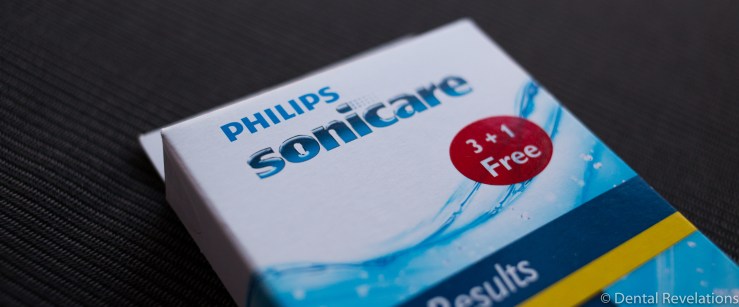
Here are couple of models of Philips Sonicare electric toothbrush:




 Dental Revelations