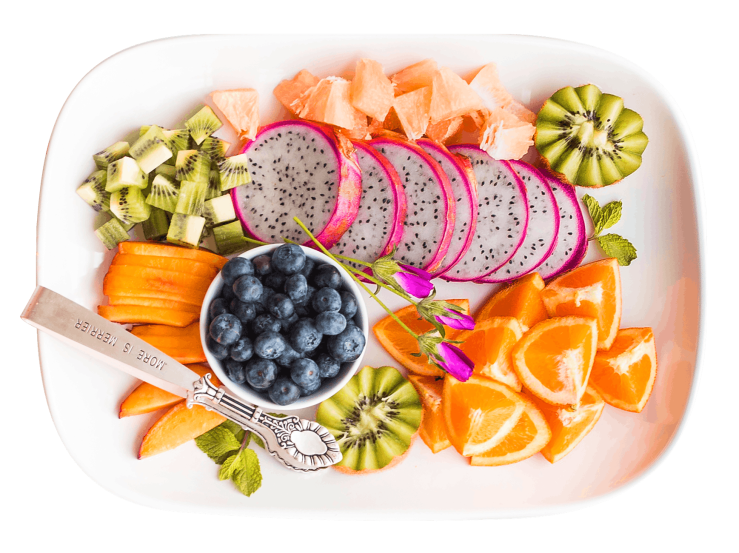
Eating fruits and berries frequently will put you at risk of dental erosion.
There has been so much discussion about dental erosion recently that I wanted to gather all the latest information in one post. I have been in dental profession for over 20 years and even I still learn new things about dental erosion. So read this post to see if you knew these things as well.
I will update this post every time I learn something new that will cause dental erosion. I would be grateful if you could collaborate by commenting this post in case I have missed some risk factors.
The Risk Factors
diet that does not contain dairy products
vegetarian diet even if dairy products are used
consumption of acidic beverages, especially when consumed between the meals (including all juices, sugar-free drinks, sparkling water, any drink with flavouring, alcohol and bubbles. As an example the pH of Coca-Cola is 2,5 = highly acidic)
vitamin supplements in a form of a drink (including fizzy tablets)
consumption of erosive foods, increased risk if consuming erosive foods/drinks over 3 times per day (e.g. fruits, berries, vinegar, pickled food, herbal tea, cola, sparkling water, juice, flavoured water)
eating sour candy
frequent consumption of alcohol
use of smokeless tobacco
frequent use of salad dressings
gastro-esophagel reflux disease (GERD)
gastro-esophagel reflux disease combined with a use of a mouth guard (read this to find out how to protect your teeth if you use mouth guard)
eating disorder (anorexia, bulimia)
frequent vomiting (e.g. when pregnant)
eating fruits between the meals (when fruits are eaten as a part of a meal = no risk)
eating indian food frequently (indian spices, especially panipuri masala, are acidic)
swishing acidic drink in mouth before swallowing
sipping an acidic drink (e.g. herbal tea, cola, sparkling water, juice, flavoured water) over a long period of time
brushing teeth after eating
brushing teeth after drinking acidic drinks like wine, juice, sparkling water
dry mouth (saliva protects the teeth, neutralises the acids)
drinking herbal tea very hot (high temperature increases the erosive potential of a drink)
consumption of pickled foods
medication that dry the mouth as a side-effect (e.g. antihistamines, antidepressants)
use of oral moisturizers with pH below 6.7 (see a table pH levels of commonly used oral moisturizers and dry mouth treatment products here)
anti-tartar toothpastes that has chelating agents – chelators bind or trap other chemicals such as calcium = they effectively remove calcium also from teeth.
use of non-fluoride toothpaste
liquid breakfast (including smoothies). There’s no saliva in mouth in the morning = nothing to neutralise acids. Chewable breakfast would make the saliva flow again after sleeping.
certain illnesses that affect the saliva flow (e.g. Sjögren’s syndrome)
drinking fruit juices instead of eating the real fruit – fruit juice has been proven to cause erosion 10 times more than the same fruit chewed.
chewing gum with liquid center including sugar-free chewing gums (also xylitol). The liquid inside the chewing gum is acidic.
sugar-free candy, especially fruit-flavoured ones (they contain high levels of food acid, particularly citric and phosphoric acid)
dry mouth + sugar-free fruit-flavoured candy to stimulate saliva flow = increased risk of erosion
asthma medication, especially if brushing after corticosteroids (e.g. Flixotide evohaler)
GUM ActiVital Toothpaste Review by Dental Revelations Blog
I recently received a free sample of new GUM ActiVital toothpaste and wanted to let you know from a professional point of view how good the toothpaste is. And if it is what the manufacturer’s selling speech on their website states:
-Effectively helps prevent cavities by remineralizing the dental enamel thanks to our patented combination of fluoride and isomalt -Prevents the plaque build-up that can harm the new permanent teeth -No alcohol, parabens, or sulfates (SLS) -Gentle formula contains natural chamomile flower extract -Yummy strawberry flavor
It seems that this toothpaste is not available in the USA yet (or no longer?), but I’m sure it can be ordered online if you are interested to try it out.
The Design
I love the green colour in the packaging design. It is simply the freshest colour there is. The pomegranate apple is a plus at least for me because I recently learned that pomegranate apple has plenty of health benefits.
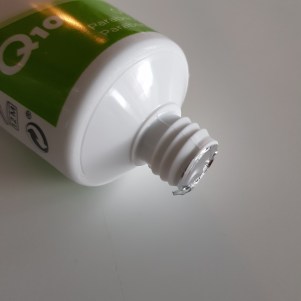
The tube is pretty much similar to the toothpastes of Oral-b and it is easy to open. Like often, there is a lid protecting the toothpaste under the cap. Not sure about what the material of the lid is – it looks metallic but is too thin to be considered as recyclable metal. Is it some sort of plastic with a foil layer? In my house that has 8 different recycling bins, this small lid has no other place than domestic waste where everything that cannot be recycled is put. I call it The Bin of Shame.
What material is the lid?
Some might think that what on earth am I on about when I worry over very small piece of non-recyclable material. But I think it is about the attitude towards the Planet Earth. We should try to use materials that can be recycled and even better thing would be if the materials we use were sustainable. No matter how small they are.
The Testing
The toothpaste is green in colour and is more like gel than a paste. Brings in mind my teenage years in the ’80s when hair gel of this colour was very popular. Do people still use it? Nowadays there are all sorts of hair clays, powders, waxes and so on to choose from. But back in the good old days we relied on the green toothpaste-like hair gel that made your hair stiff as a stick.
Sorry, couldn’t resist walking down the memory lane. Back to the subject.
ActiVital toothpaste
I always want to know if the toothpaste contains microbeads and the closer look at the toothpaste does not show any beads in it. It’s almost silky smooth to the eye.
A hair gel?
Also the ingredients list (see at the end of this post) does not state any microbeads (polyethylene or polypropylene).
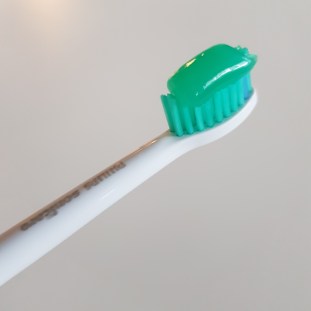
So, lets put the toothpaste on my beloved Philips Sonicare’s bristles. The toothpaste is very firm in texture and stays put when applied to the brush. That is a plus in my opinion.
The best toothbrush ever! And pretty good toothpaste as well.
The toothpaste tastes pleasant and is not too strong in flavour. It is minty, but has this kind of earthy taste, like hint of herbs. So far no burning or any other unpleasant sensations can be felt.
It forms a slight foam despite the fact that it does not have sodium lauryl sulfate (SLS aka soap) in it. This is another plus as SLS can cause adverse reactions. Instead there are three other ingredients that have bubble-forming properties (Hydroxyethylcellulose, Lauryl Glucoside and Cocamidopropyl Betaine).
I must say that this toothpaste is very pleasant to use compared to ones that have no bubble-forming agents and kind of vanish in mouth when brushing. I have found that many of my patients are wondering if non-foaming toothpastes actually do their job. Of course non-foaming toothpastes are as effective to one’s dental health as the foaming ones but somehow people have associated foaming to the effectiveness of the toothpaste.
After brushing for about 2 minutes, it still feels pleasant in mouth. No numbing or burning feeling can be felt.
After spitting out the toothpaste a fresh feeling stays for a long time in mouth. Also my teeth feel VERY clean and smooth. This in fact is worrying for me as a dental professional and only one question pops up in my mind:
what is the RDA of this toothpaste?
Well, I found the answer from the internet and to my surprise the RDA level is only 50! Amazing! With very low abrasivity this toothpaste does it’s job very well. Another plus deserved.
Would I recommend
It definitely cleans well and that alone is reason enough to recommend it.
But as a dental professional I must look deeper.
I am always interested in the ingredients that can cause adverse reaction. I once experienced an adverse reaction from a toothpaste and since then I have been more alert when my patients experience e.g. dry mouth or have lichenoid lesions in mouth. These and many other symptoms can be caused by certain ingredients in toothpaste.
In Gum ActiVital toothpaste there is cocamidopropyl betaine, which is a foaming agent that can cause adverse reaction. It has been named as an Allergen of The Year 2014 by the American Contact Dermatitis Society. This fact alone is pretty condemning.
Also flavourings in toothpaste can cause adverse reaction and with ActiVital toothpaste the flavouring is only stated with a word aroma. Pretty vague description and as a consumer I would definitely want to know more about it. The packaging states fresh mint but why not clarify it on the ingredient list? There is funny error on their website regarding the flavouring. It’s the
I noticed this just after I had written my experience of the taste (earthy taste, like hint of herbs). Made me smile. They must have mixed up the advertisement contents of their children’s toothpaste and ActiVital toothpaste. Should they be informed about this error or just leave it like it is?
The manufacturer has considered one of the ActiVital toothpaste’s ingredient so important that they have put it in the packaging in quite large font. That is Q10.
Cropped image from the Activital packaging.
Now this is interesting and I must say I think it is just a way to make the toothpaste more appealing by the known anti-ageing properties of Q10. I researched and researched to find out if there is benefit of using Q10 in the toothpaste and I’m afraid there isn’t any proven benefit. There has been a study in 1995 “Coenzyme Q10 and periodontal treatment: is there any beneficial effect?” ( by Watts, T. L. P. British Dental Journal. Department of Periodontology and Preventive Dentistry, UMDS, Guy’s Hospital London). Only the study’s abstract is available online and it states that G10 is not in fact beneficial when treating periodontal disease. No later studies are available online which in this modern world means there is none.
When doing my research I found out that the manufacturer Sunstar has a questionable advice on their website regarding the use of the toothpaste
Brush with our multi-functional GUM® ActiVital® Toothpaste after each meal to help keep your mouth healthy in the long term
Honestly, in a world where dental erosion is almost epidemic, you should know better not to advice people to brush the teeth after each meal. The latest studies suggest that you should forget about the whole business of brushing after meal. The studies have found that the pH level in mouth is still low even after 2 hours of eating. So you may brush before the meals but not after – just remember that we only advice to brush twice a day normally.
So, would I recommend?
Yes, I would. If you are not afraid of the long ingredient list and one definite allergen on the list (not everyone will get adverse reactions), just try the toothpaste and see how you feel about it. The most important thing for me is that the toothpaste does not contain SLS (soap), the RDA level is not over 100 and it contains enough fluoride. GUM ActiVital has fluoride content of 1450ppm which is the recommended level for the adults. So it does prevent cavities by remineralizing the teeth as they promise. Also Activital has ingredients that are anti-inflammatory and anti-microbial.
I have been using this toothpaste for 3 weeks now and my teeth have never felt so polished after brushing. So I think I will carry on using it until better one shows up.
The Ingredients
Glycerin – an organic compound most commonly from animal fat and vegetable oil
Propyl Steardimonium Chloride – Not much information is available about this ingredient. I found out that it is conditioning agent and either synthetic or animal origin. If you know more about this ingredient, please contact me.
Bisabolol – anti-inflammatory (found in chamomile flowers).
Punica Granatum Fruit Extract – pomegranate fruit extract, essential oil. Reduces plaque development, works as an anti-cariogenic (anti cavities) agent.
Ubiquinone – also known as coenzyme G10. An antioxidant.
Potassium Sorbate – an antimicrobial preservative. Possibly used instead of parabens. Generally regarded as safe to use.
Zingiber Officinale Root Extract – Ginger root extract. An anti-inflammatory and anti-bacterial ingredient
CI 42090 – colouring agent. Approved food colorant in EU and approved to be added to food in US.
It is time for my second review. This time it is the GC Tooth Mousse. I have been using this product on my patients and myself for several years and I am going to tell you how I choose the patients whose teeth will get application of Tooth Mousse and why many patients also get advice to use Tooth Mousse at home.
There will be instructions on how to use the Tooth Mousse at home and in surgery.
What Is Tooth Mousse?
Gc Tooth Mousse review by Dental Revelations
Mousse? Not really. The name is slightly misleading as it is more like a gel. But I guess strawberry flavoured mousse brings positive associations in people’s minds. Almost like a delicious dessert. It does taste pleasant though. There are 5 different flavours: the featured strawberry, vanilla, melon, mint and tutti-frutti.
Let’s see first what the manufacturer’s selling speech is:
When Tooth Mousse is applied to tooth surfaces, the CPP-ACP molecule binds to biofilm, plaque, bacteria, hydroxyapatite and surrounding soft tissue.
-Delivers Recaldent™ Casein Phosphopeptide – Amorphous Calcium Phosphate
-Inhibits enamel demineralisation and induces remineralisation
-Reduces hypersensitivity by obturating open dentinal tubules
-Prevents initial caries forming thanks to the anti-cariogenic properties
-Reverses white spot lesions
-The delicious flavours stimulate saliva flow for an enhanced effectiveness of CPP-ACP
Many difficult to understand words I think. And this letter combination CPP-ACP, what the heck is that? If you are a common consumer, you probably are not 100% sure what you just read. I will try to tell the same in more simplified way.
What Is the Secret in Tooth Mousse?
It is the milk. Well part of it.
It is known that milk is beneficial to dental health due to its calcium and other derivatives. Tooth Mousse contains plenty of calcium complex of CPP-ACP (see below where this abbreviation comes from), commercially named as Recaldent, which is the ideal delivery system for calcium and phosphate ions that are naturally available in milk.
Recaldent is derived from the milk protein, casein hence the protective effect to the teeth.
Research has shown that this activity is due to a part of the casein protein called Casein Phosphopeptide (or CPP), which carries calcium and phosphate ions in the form of Amorphous Calcium Phosphate (or ACP).
GC Tooth Mousse does not contain fluoride but there is a product called GC Tooth Mousse Plus that contains fluoride (900ppm).
Who Benefits of Using Tooth Mousse?
On top of my list are definitely the patients with signs of dental erosion. But these people fall into two different categories – to the ones whose dental erosion is active and progressing and to the ones whose dental erosion has stopped progressing and no reason from diet or health, that would cause erosion, can be found.
The former group will always (with three exception, will tell you about it later) get an application of Tooth Mousse in my surgery. People who belong to this group are often vegetarians, vegans and people suffering from gastric reflux – they are the ones who suffer from the dental erosion the most. And especially people who have gastric reflux and grind/clench their teeth at night – if they use night guard, then even more so as the saliva that protects the teeth is present in very small amounts in mouth at night and this small amount of saliva is not able to reach the top teeth that are covered by the night guard.
The problem is that even though the saliva is not able to reach the top teeth, the stomach acid is because it travels on the surface of the tongue. The tongue rests often against the roof of the mouth and the stomach acid has access under the night guard. And stomach acid is very acidic – its pH is between 1,5-3,5.
To these patients I also advise to buy Tooth Mousse to be used at home. And once they have used it regularly I often see that the enamel has restored its shine again. Of course you cannot grow the lost enamel back by using this product but Tooth Mousse will make the remaining enamel stronger to the effects of acids.
The dental erosion is not the only reason for the application of the Tooth Mousse. I will apply Tooth Mousse to the patients
that suffer from dry mouth (xerostomia)
who have high risk of caries
who have hypersensitivity
Also I apply Tooth Mousse after scaling and root planing, after bleaching and after removal of orthodontic brackets to prevent sensitivity after treatment.
The Exceptions?
I do not apply the Tooth Mousse to people
who are allergic to milk protein as the Recaldent is derived from the milk protein, casein.
who are allergic to hydroxybenzoates.
who are strict vegans as everything entering the mouth should be plant-based.
How to Apply Tooth Mousse at Home?
It is very easy to apply Tooth Mousse at home. If you are a night guard user, continue reading further to find out how to use it with night guard at night.
Follow these simple steps:
Brush your teeth and clean in between the teeth thoroughly.
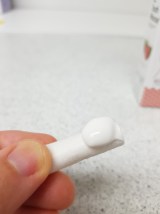
Wash your hands and apply pea size amount to the back of your hand. Then apply another same sized amount next to the first one (see photo). Now you have one dosage for your upper teeth and one for your lower teeth. This is the minimum dosage.
Use a clean finger or a cotton swab/bud (see the photo) so spread Tooth Mousse all over you teeth (see photo).
Leave the Tooth Mousse undisturbed for at least 3 minutes (go and watch the telly to make the time pass quicker – it doesn’t matter if the Tooth Mousse stays undisturbed in your mouth for longer. The longer it stays, the better).
Once 3 minutes has passed, move your tongue over your teeth to spread the mousse everywhere in your mouth, including the soft tissues. You can swish the mixture of saliva and Tooth Mousse around your mouth. Try to keep the liquid in your mouth for 2 minutes and then spit out the liquid. There is also an option not to spit out – just spread the mousse with your tongue all over you mouth and that’s it. Leave it there. If doubting – jump to Is It Necessary to Spit It Out?
Do not eat, drink or rinse for 30 minutes.
Tooth Mousse with night guard (especially if you suffer from gastric reflux):
Brush your teeth and clean between the teeth (or vise versa, it doesn’t make much difference which way around you do it).
Clean the night guard by using manual toothbrush for it. Do not use toothpaste for the night guard.
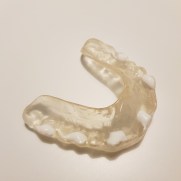
Apply small amounts of Tooth Mousse inside the night guard (see photo) and place it in your mouth.
Sleep tight, don’t let the bed bugs bite.
In the morning, brush the night guard with manual toothbrush and rinse with water. Brush your teeth as well.
How to Apply Tooth Mousse in the Surgery?
Demonstrative photo.
If there is lots of saliva in the surfaces of the teeth I dry the surfaces with a cotton roll. The enamel does not need to be absolutely dry so do not use pressurised air.
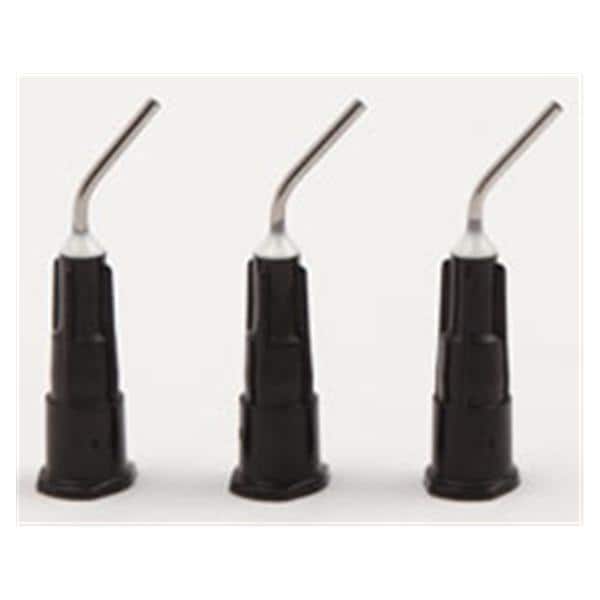
For the application I often use Monject syringe with a black dispensing tip (19 gauge) but it can be applied also with a cotton roll – just remember the aseptic technique. Pea size amount per arch is the minimum amount for the application.
Now after the applications there are two ways to do proceed. I pretty much always ask the patients to ignore the Tooth Mousse for couple of minutes and then to move the tongue over the teeth to spread the gel also to the soft tissues. And that’s all. Very simple to apply. But always remember to instruct the patient not to drink, eat or rinse for half an hour after the application.
Another option is to repeat the above but after the patient has spread the gel around the mouth you can advice her to wait for couple of minutes before spitting out all the extra saliva and Tooth Mousse. Advise patient not to eat, drink or rinse the mouth for half an hour.
Personally I stick to not spitting out.
Is It Necessary to Spit It Out? Oh, the Confusion!
Now personally I find it confusing that two different ways to do it is advised by the manufacturer. Why not stick to advising to leave the Tooth Mousse in mouth if there is no reason to spit it out?
In their leaflet where Tooth Mousse is introduced, they advice to leave the Tooth Mousse in mouth without spitting:
For at-home use: when your patients apply Tooth Mousse and MI Paste Plus immediately before going to bed, they should leave it on their teeth to slowly dissolve overnight.
4. Expectorate thoroughly and if possible avoid rinsing. Any GC Tooth Mousse remaining on the surface can be left to gradually dissipate overnight. Do not eat or drink for 30 minutes following application.
To make it even more confusing, on their FAQs leaflet they leave it up to the consumer whether to spit out or not. This what the manufacturer answers to the customer’s question Do I need to wash it off?
This is a matter of preference. For the maximum benefit, leave it on the teeth as long as possible. The minimum recommended application time is three minutes. You can then rinse the mouth or simply wipe any remaining crème from the teeth.
And to the question Is it safe to swallow?
Yes. The main ingredient of GC Tooth Mousse® is derived from milk casein and, like milk and cheese, is edible. GC Tooth Mousse® should not be used by people with milk protein allergies or sensitivity to benzoate preservatives.
If it does not really matter whether to rinse or not to rinse but it would be beneficial to leave the Tooth Mousse in mouth as long as possible, I repeat – why not stick to advising Do not spit?
Would I Recommend This Product?
Hell, yeah.
I have noticed numerous times that sensitivity after scaling and root planing is almost non-existent every time I have applied Tooth Mousse after treatment.
Also the enamel restores its shine after patient suffering from dental erosion has used Tooth Mousse regularly. Of course I must say that one part of this process is the fact that many people change their lifestyle habits once they understand that the enamel does not grow back once it’s gone. There is natural defence in everyone’s mouth and that is saliva. As long as there is not too much for the saliva to handle in daily basis (e.g. sour drinks, snacking), it can keep the enamel healthy.
It is comforting to know that there is something that the patients suffering from the gastric reflux can use at night to protect their teeth from the stomach acid. Gastric reflux is a nasty thing to have and very often patients do not even know they are suffering from it but that is completely another story. I might write a short post about it soon.






 Dental Revelations